
The Business Situation
An established food and beverage company was looking to grow beyond its core product line. The opportunity they identified was real and timely: the at-home cocktail market, where consumer interest in pre-made mixers and craft cocktail experiences had been rising. The category was expanding. Could this brand enter it successfully?
The client needed to understand the territory from the inside. How do consumers make cocktails at home? What role do pre-made mixers play? And most urgently: would their prototype connect with the consumers they were trying to reach?
This was not a small bet. New product development at this stage requires significant investment, and the cost of discovering a misalignment after commitment is steep. The client needed consumer evidence before moving forward.
The Business Question
We think we have the right product. But does our packaging tell the right story?
The research needed to answer three things in a single study: how consumers behave around at-home cocktail-making; where existing mixer products fall short; and which prototype packaging concept would resonate most, and why.
They needed reactions from real consumers in real settings, making real drinks, responding to real packaging in their hands.
Our Approach
Bringing the Research to Where the Experience Actually Happens
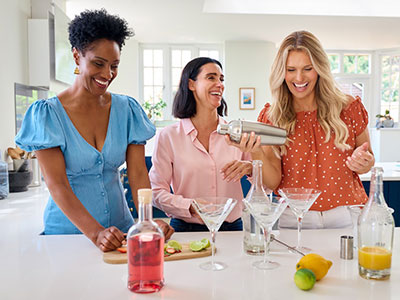
To get more authentic reactions, sessions were held at an Airbnb property chosen to replicate the relaxed, social environment in which at-home cocktail-making typically takes place.
We recruited respondents and asked each to bring two friends, forming triads of three participants.
The methodology was deliberate. Cocktail-making is an inherently social activity. Individual interviews would have stripped away group dynamics. A traditional focus group room would have introduced an artificiality that could suppress honest behavior. By having friends participate together in a comfortable home setting, we captured the real conversation, the real decision-making, and the real behavior that happens when people gather to enjoy a drink together.
Participants were given the prototype product and asked to mix cocktails on-site. Multiple package designs and communication approaches were tested in the same session, enabling direct comparison and in-context feedback.
What We Found
Two Designs Rose to the Top. The Research Showed Why.
Across the sessions, two packaging designs emerged as meaningfully stronger than the rest. Both communicated the product’s brand story more clearly and made directions easier to understand at a glance, a critical factor for consumers using a new product format for the first time.
- One clear winner. Of the two finalists, one stood out further. It conveyed the anticipated taste of the product more vividly, giving consumers a sensory impression before they ever opened the package. In a category driven by imagined flavor experience, that distinction carried real strategic weight.
- Story elements mapped. The research identified which specific elements of the brand story landed with consumers and which fell flat. That granular understanding was as valuable as the packaging verdict itself.
The Outcome
The client entered final development with a clear, consumer-validated direction: one packaging concept with documented strengths, a defined brand story hierarchy, and a specific understanding of the flavor communication elements that would drive purchase intent.
They did not have to guess. They did not have to rely on internal debate or category intuition alone. They had evidence from the people they were trying to reach, gathered in conditions that reflected real purchase and use behavior.
That’s what it looks like when research illuminates the decision in front of you.